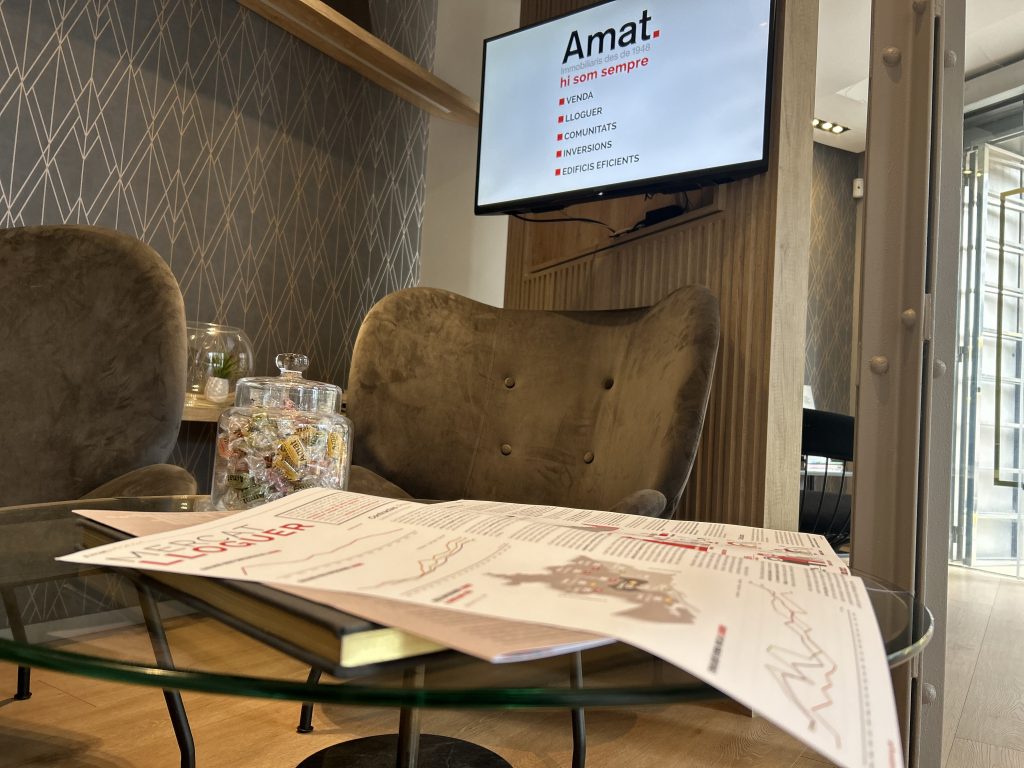
We present the 2025 Market Report to the press
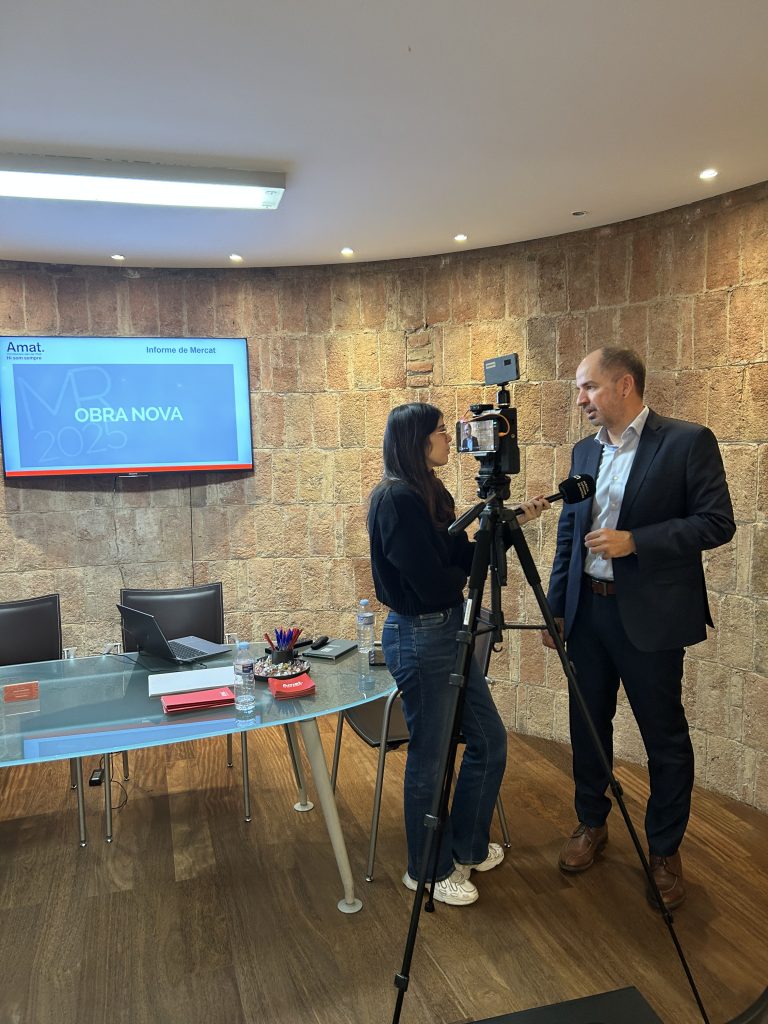
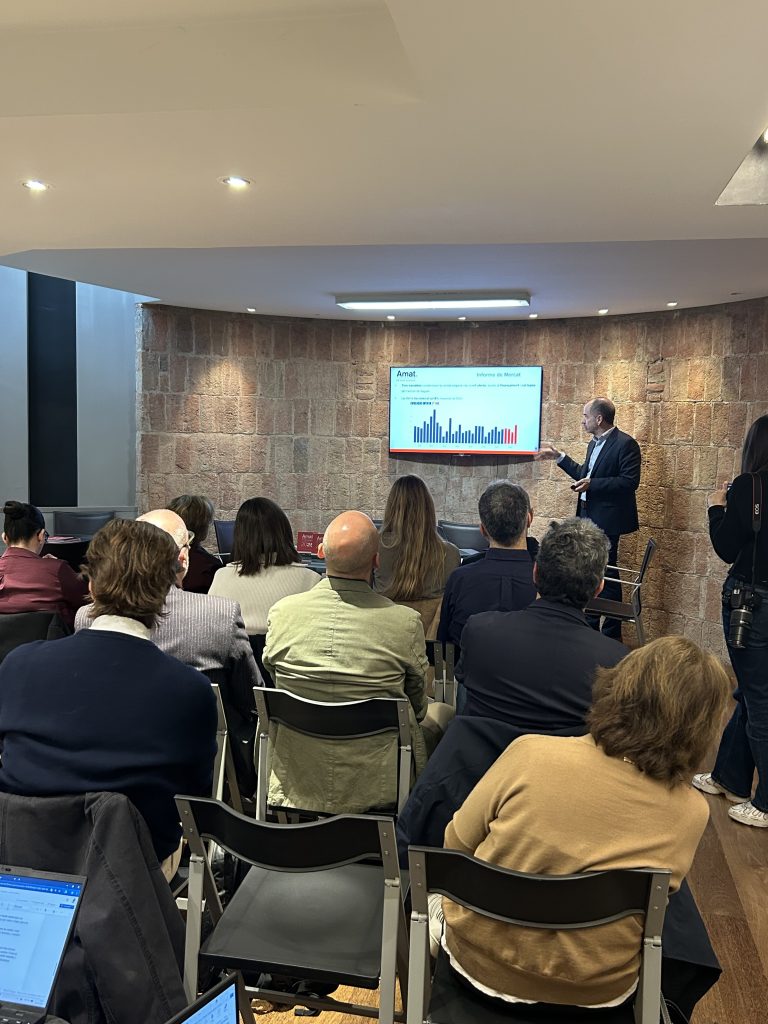
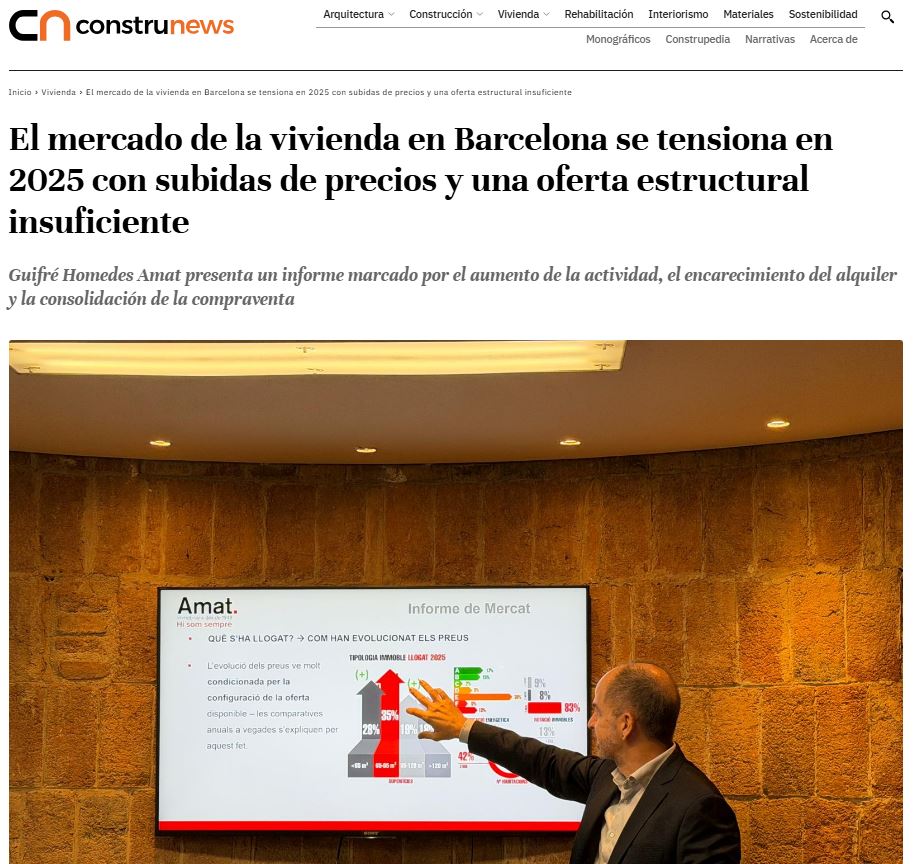
Amat’s Managing Director, Guifré Homedes, presents the 2025 Market Report at our Luxury office in Barcelona.
Once again, on March 18, our Managing Director, Guifré Homedes, presented to the media the 13th Amat Immobiliaris 2025 Market Report, an analysis based on proprietary data that provides insight into the real evolution of the market throughout 2025 and identifies the trends that continue to shape the sector.
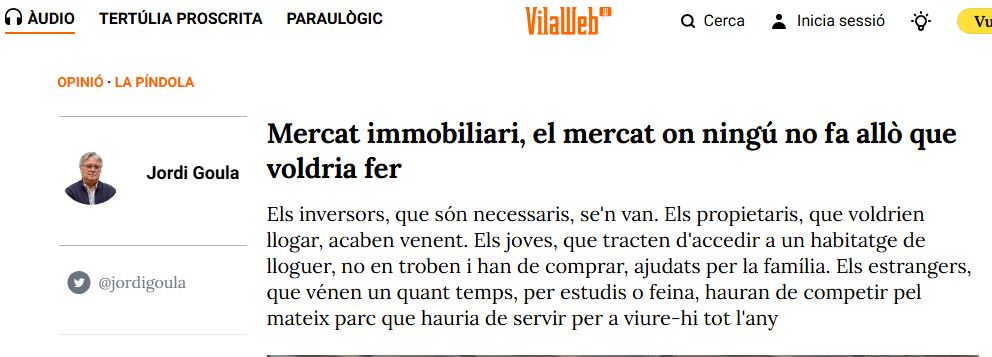
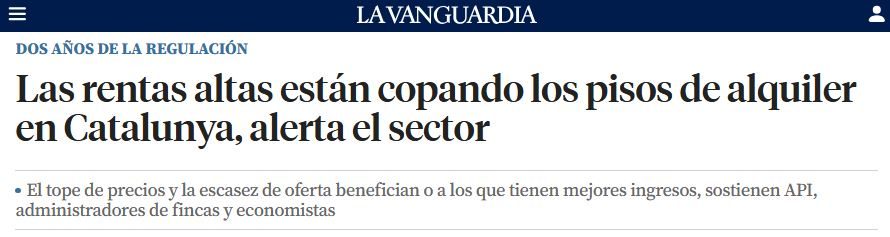
Analysing the housing market has become an increasingly complex exercise. The market is currently in a situation of maximum tension, and perceptions of how it operates clearly depend on perspective: while access to housing is becoming increasingly difficult for demand, regulatory constraints and legal uncertainty strongly condition decision-making on the supply side.
Around 16 media outlets attended the presentation held at our Amat Luxury office on Balmes, where we addressed the lack of housing supply—particularly in the rental market—the growth of foreign tenants, as well as the increase in second-hand sales and new-build developments.


Rental market
Access to rental housing remains one of the main challenges in the real estate market. In 2025, 8.1% more new contracts were signed compared to the previous year; however, this increase in activity has not been accompanied by a structural improvement in supply, which remains at very low levels.
The market continues to be shaped by a structural shortage of available homes, which determines the number of contracts, the type of properties entering the market, prices, and tenant profiles. The increase in transactions is mainly due to a slight improvement in the turnover of the existing housing stock—driven by home purchases, personal changes, or relocations outside the metropolitan area—while new investment in long-term rentals remains close to historic lows.
In this context, rental prices are rising again. The average price stands at €16.43/m²/month (+8.9%), and the average rent reaches €1,482/month (+7.1%). This increase is strongly influenced by the mix of available housing, with a growing share of medium and large apartments, while mid-range housing types are becoming increasingly scarce.
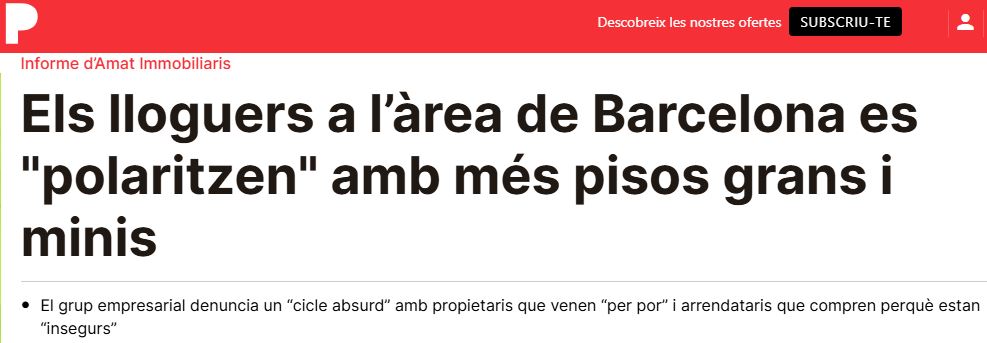
Regarding tenant profiles, the share of foreign tenants continues to grow—especially in Barcelona—while the proportion of younger tenants has declined for the second consecutive year, highlighting the worsening accessibility problem.
“More activity does not mean greater normalisation: the underlying problem in the rental market remains a structurally insufficient supply.”
Seasonal rentals
The seasonal rental market maintained a steady performance throughout 2025, with moderate growth in activity and sustained demand. One of the most significant indicators of the year was the increase in the average stay to 17 months, confirming a trend already observed in previous years.
This evolution reinforces the idea that seasonal rentals are not primarily linked to very short stays, but rather to real needs for temporary residence associated with professional and academic projects. The main reasons for contracts continue to be work-related relocations and studies, with a clear predominance of international profiles.
From the supply perspective, no significant shift of properties from long-term rentals to seasonal rentals has been detected. Nevertheless, the few active investors tend to prioritise this segment in response to regulatory uncertainty.
“Seasonal rentals meet a structural and sustained demand, closely aligned with the city model.”
Sales market
Second-hand homes
2025 was a clearly expansionary year for the residential sales market. Activity grew by over 10%, both in the number of transactions and in the total transaction value, consolidating a trend that had already begun the previous year.
Difficult access to rental housing has acted as a driver for home purchases, both from the demand and supply sides, supported by the consolidation of more stable and competitive interest rates. This environment has provided greater security and predictability in mortgage financing.
Sale prices have remained broadly stable, with a slight upward trend of 2%. In Barcelona, the average price stands at €5,103/m², while Sant Cugat del Vallès reaches a new high at €5,217/m². In Sant Just Desvern, prices have moderated, but the average absolute price has exceeded €800,000 for the second consecutive year.
One of the most relevant developments in 2025 is the near disappearance of investors, a trend we consider concerning from a market balance perspective, as it further limits the capacity to expand rental supply.
“The complexity of the rental market has driven home sales, but the disappearance of investors does not help resolve the structural supply problem.”
New-build homes
New-build home sales experienced a 40% increase in 2025, mainly driven by a higher number of developments entering the sales phase and by very active demand with real housing needs.
The average sale price was approximately 15% higher than in 2024. However, this figure should be interpreted with caution, as year-on-year comparisons are not always homogeneous and depend on the phase and typology of each project.
New-build properties continue to stand out for their high energy efficiency, mostly achieving A and B ratings, which translates into savings and greater comfort for new owners.
“Despite rising prices, the upward potential of new-build homes is limited in metropolitan areas.”
Luxury
The high-end segment has maintained an upward trend, with a moderate price increase of over 2%. Most transactions involve houses and single-family homes, and demand remains predominantly local.
Particularly noteworthy is the return of local profiles who had previously lived abroad and are now coming back to settle in Barcelona or its surroundings, occupying this segment of the market.
“Even in the high-end segment, local demand carries more weight than is often perceived.”
Conclusions
2025 only reinforces trends already highlighted in previous reports:
a structurally insufficient supply, prices that do not fall, and extremely high competition for each available home.
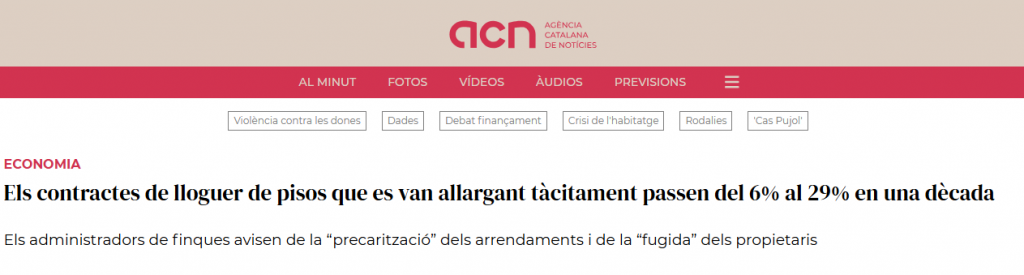
In addition, one of the key factors that has consolidated is the progressive disappearance of residential investors. For years, this profile purchased homes to rent them out, contributing to the expansion of the available housing stock. Today, however, the regulatory environment and legal uncertainty have discouraged this activity, reducing the inflow of new homes into the market and further exacerbating the current shortage of rental supply.
Without structural changes or broad consensus, 2026 is shaping up to be a continuation of 2025, with a highly tense market for both demand and supply.
“More transactions and higher prices, but no structural solutions to the accessibility problem.”
For any questions or if you would like more information, please contact us at info@amatimmo.cat or call us on (+34) 934 803 400.